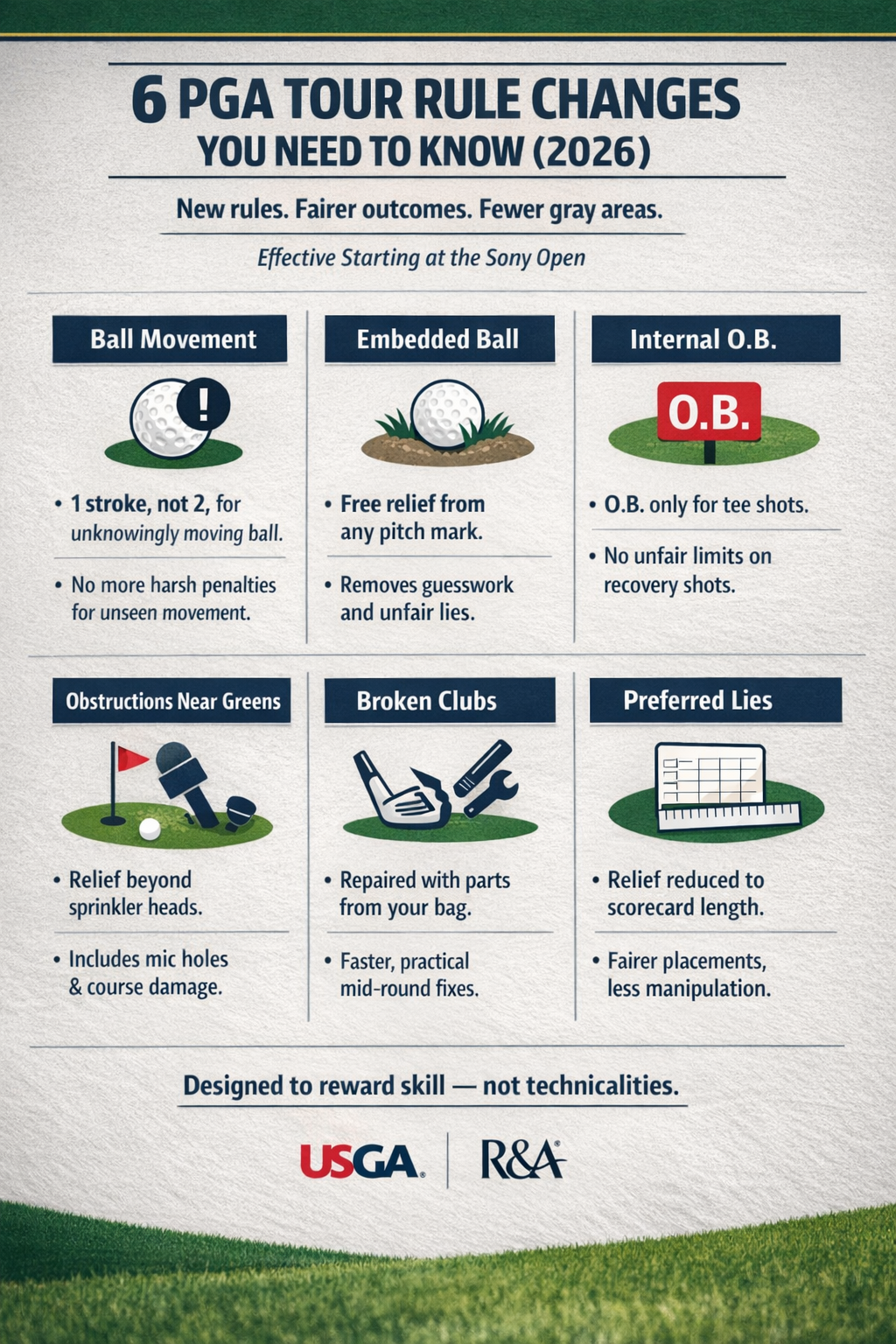
Beginning with the 2026 season opener at the Sony Open in Honolulu, six new rule modifications will be implemented. These changes address various aspects, including ball movement, preferred lies, internal out-of-bounds, and damaged equipment. Unlike previous updates that primarily addressed minor details, these modifications are intended to reduce severe penalties, clarify ambiguous situations, and prioritize player skill over technicalities.
1. Ball Moves Without Player’s Knowledge
What changed
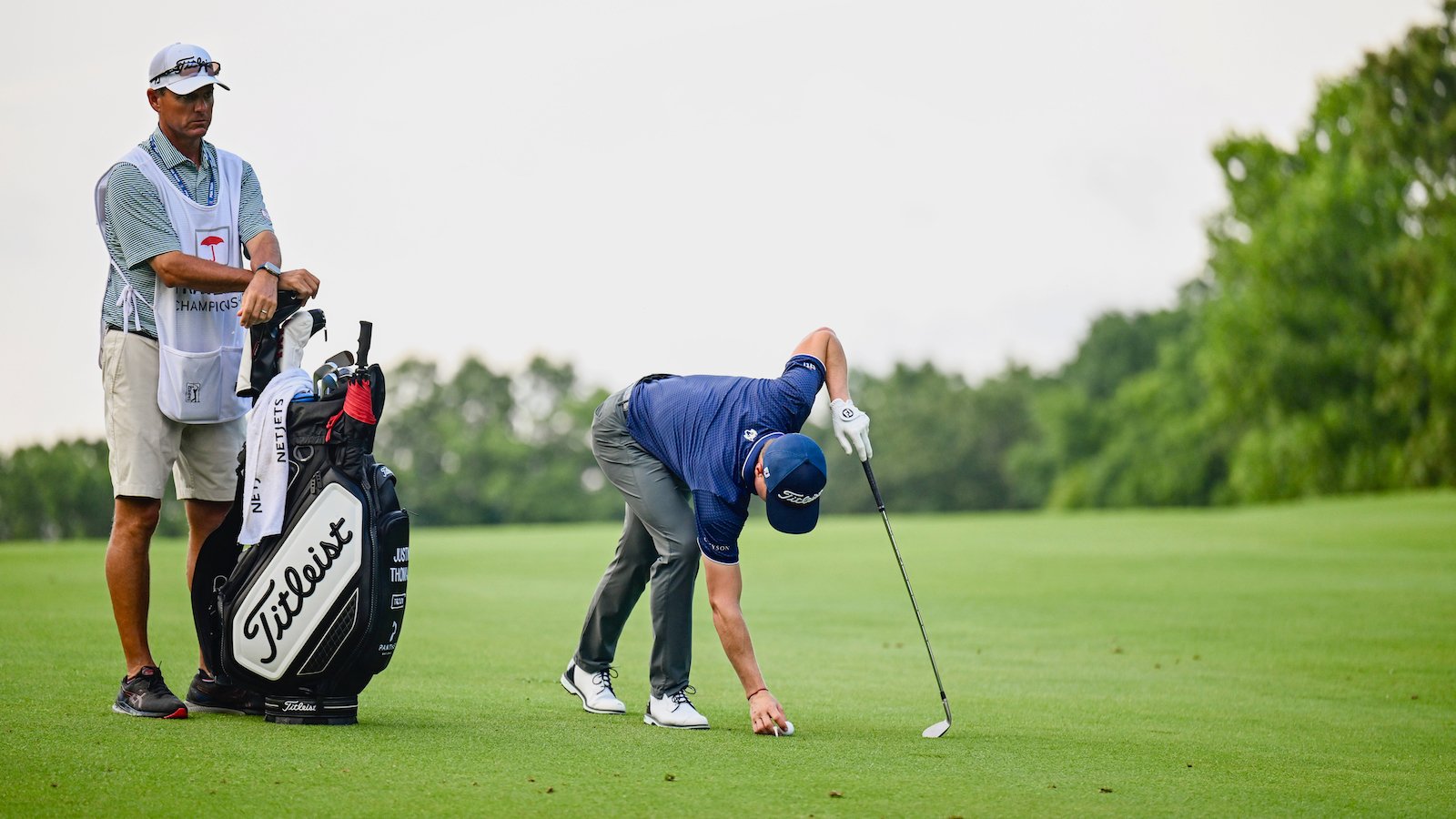
If a player moves their ball without realizing it and does not replace it, the penalty is now one stroke instead of two.
A player is not considered to be playing from the wrong place if they did not know the ball had moved.
Why the change
It seemed unfair to penalize players for ball movement they could not reasonably notice.
High-profile cases, such as Shane Lowry at the 2025 Open Championship, demonstrated how strict the old rule was.
Now, the rule depends on what the player actually knew, not what slow-motion video might show.
Officials cannot expect players to know about ball movement that is impossible to see in real time.
2. Expanded Relief for Embedded Balls in Pitch Marks
What changed
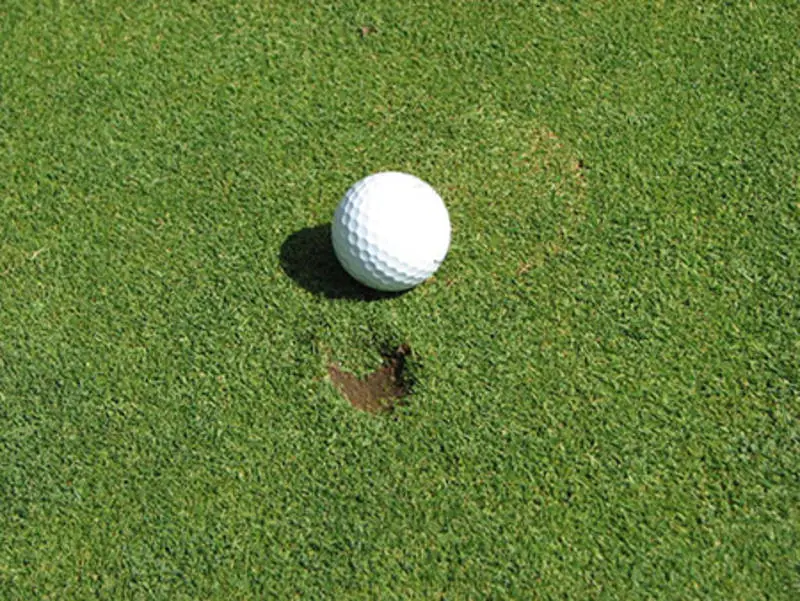
Players can now take free relief if their ball gets stuck in any player’s pitch mark.
This relief is allowed in areas cut to fairway height or shorter, as long as the pitch mark has not been fixed.
Why the change
It was often just a guess whether a ball landed in its own pitch mark or someone else’s.
Frequent wrong rulings led to inconsistency and frustration.
Famous cases, such as Paul Casey at The Players and Shane Lowry at the PGA Championship, demonstrated unfair results.
This change removes confusion and makes things fairer.
3. Internal Out of Bounds Limited to Tee Shots
What changed
Internal out of bounds now only applies to shots taken from the teeing area.
After a player hits their tee shot, internal O.B. objects are treated as obstructions, not boundaries.
Why the change
Internal OB is intended to prevent players from intentionally using the wrong fairway when teeing off.
Under the old rule, players could be unfairly blocked later in the hole, for example, unable to chip out sideways.
This preserves the course design’s intent without penalizing recovery shots.
It allows players to manage risk more effectively while preserving the course’s strategy.
4. Expanded Relief from Immovable Obstructions Near Greens
What changed
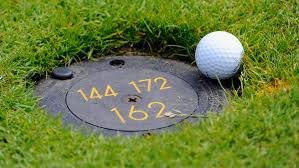
Committees can now give relief from any immovable obstruction near the green, not just sprinkler heads.
This applies when an obstruction gets in the way of a likely putt from off the green.
Why the change
Modern course setups encourage putting from the fringe and apron.
Other obstructions, like microphone holes or maintenance damage, were causing unfair interference.
Players could not fix these problems on their own.
The old rule that treated sprinkler heads differently from other obstructions was inconsistent.
5. Replacement of Broken or Damaged Clubs Using Bag Components
What changed
Players can fix or replace a damaged club during the round if they have the needed parts in their bag.
The replacement must keep the club set’s order and structure.
The damage cannot be from misuse or abuse.
Why the change
The old process was slow and disruptive.
Sometimes, players had the right parts with them but were not allowed to use them.
This change accelerates play and simplifies it.
The 14-club limit still applies; extra parts do not count as an additional club.
6. Preferred Lies Relief Area Reduced
What changed
The preferred lies relief area is now one scorecard length, about 11 inches, instead of one club-length.
Why the change
This change brings the PGA Tour in line with other major tours and golf organizations.
It reduces the likelihood of players gaining an unintended advantage, such as from grain direction or collar placement.
This rule keeps the ball closer to its starting position, making outcomes more equitable.
This change was primarily driven by player feedback.
Today’s course conditions no longer require such large relief areas.