Physical Address
304 North Cardinal St.
Dorchester Center, MA 02124
Physical Address
304 North Cardinal St.
Dorchester Center, MA 02124
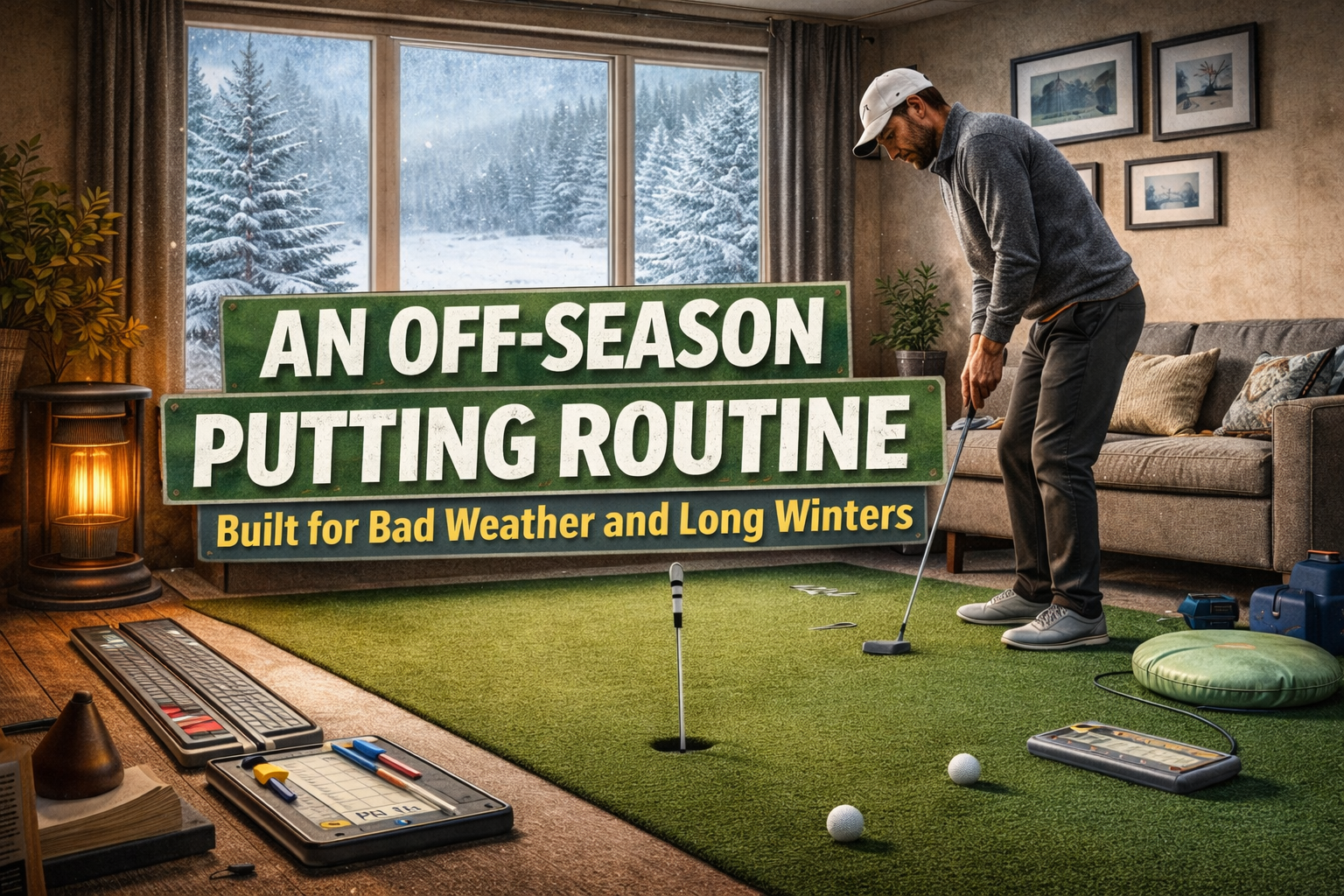
The off-season is when my putting either quietly improves or slowly slips if I’m not intentional. Right now, I’d describe my putting as solid but inconsistent. I can roll it well for stretches, then suddenly struggle with speed control or confidence on short putts. Instead of hoping that it fixes itself once the season starts, I’ve learned winter is where the foundation gets built.
That’s why my off-season focus is putting. Strokes are gained and lost on the green year-round, and putting is the one part of the game I can train every single day indoors. This routine isn’t a quick fix. It’s a process built around repetition, feedback, and confidence.
For amateur golfers, putting is also the easiest place to improve without hitting full shots. No range, no perfect weather, just structure and consistency.
My goals this winter are obvious:
My biggest weakness has been speed control, specifically, hitting putts too hard with inconsistent strikes. When that happens, even a good read doesn’t matter.
I can measure progress in two ways:
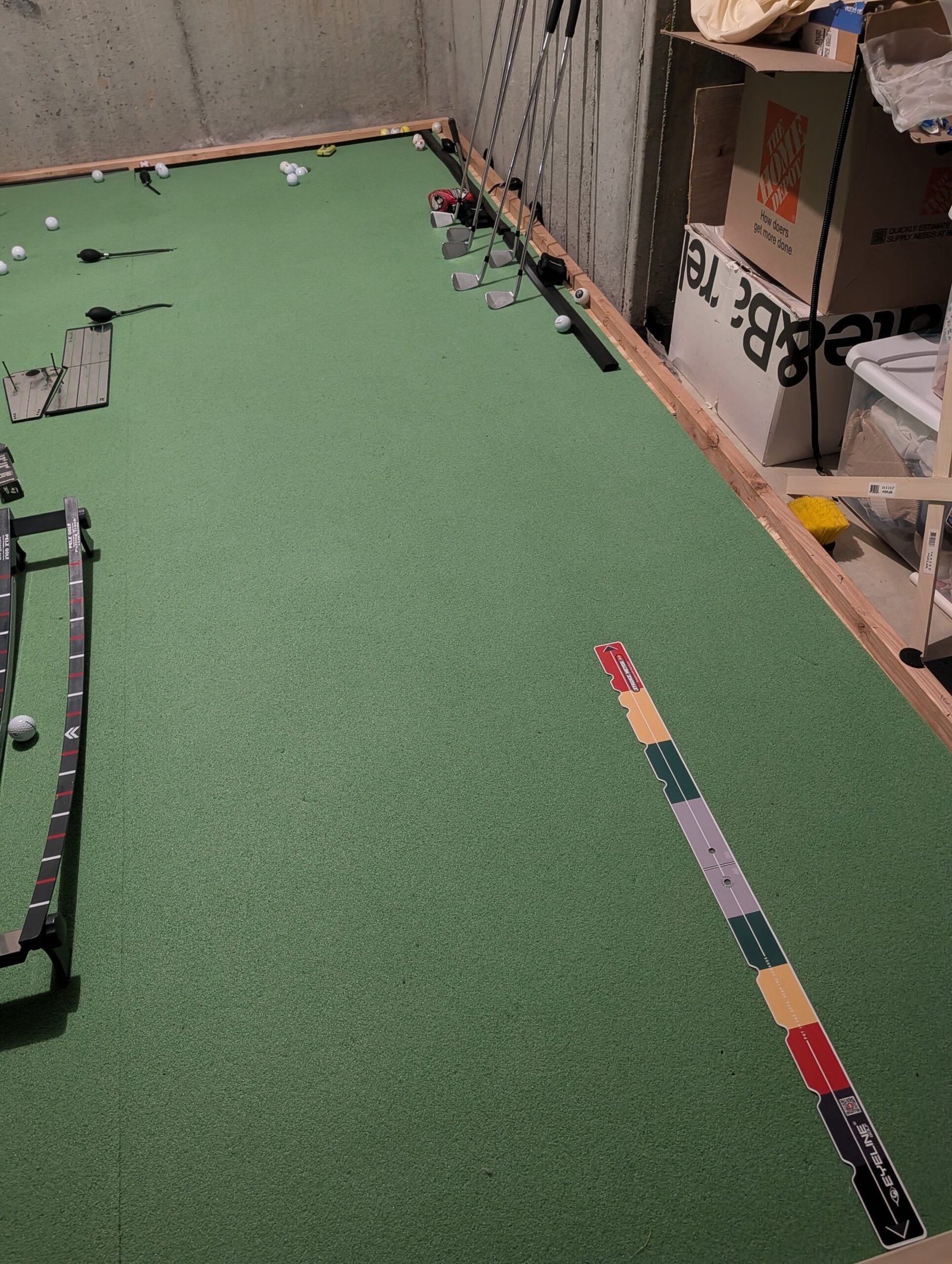
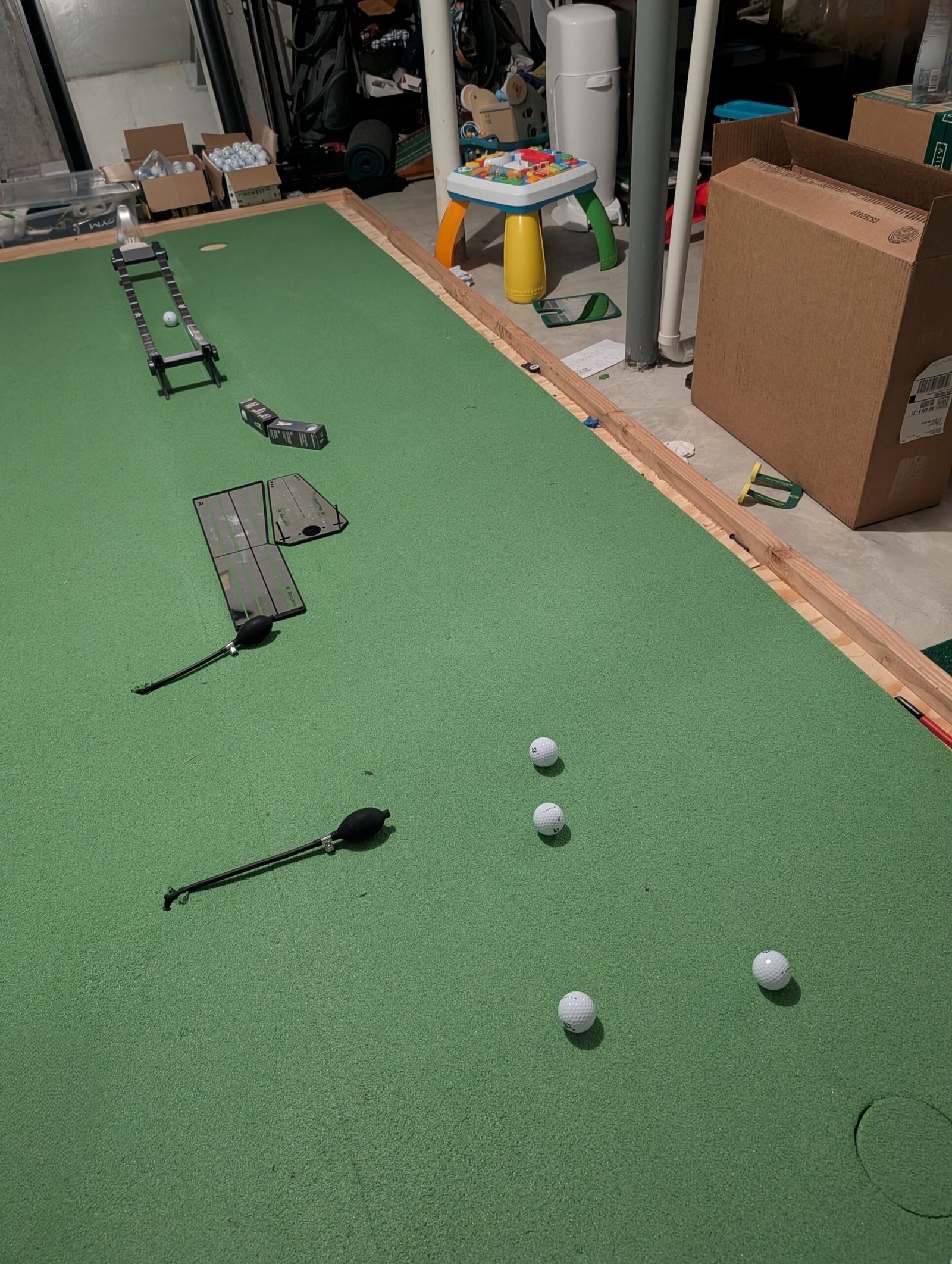
All of my winter putting work happens indoors in my basement, where I built a 12’ x 7’ BirdieBall putting green. Living in the Midwest, winter limits outdoor practice, so I lean fully into working on the details that actually lower scores, speed control, setup, and solid contact.
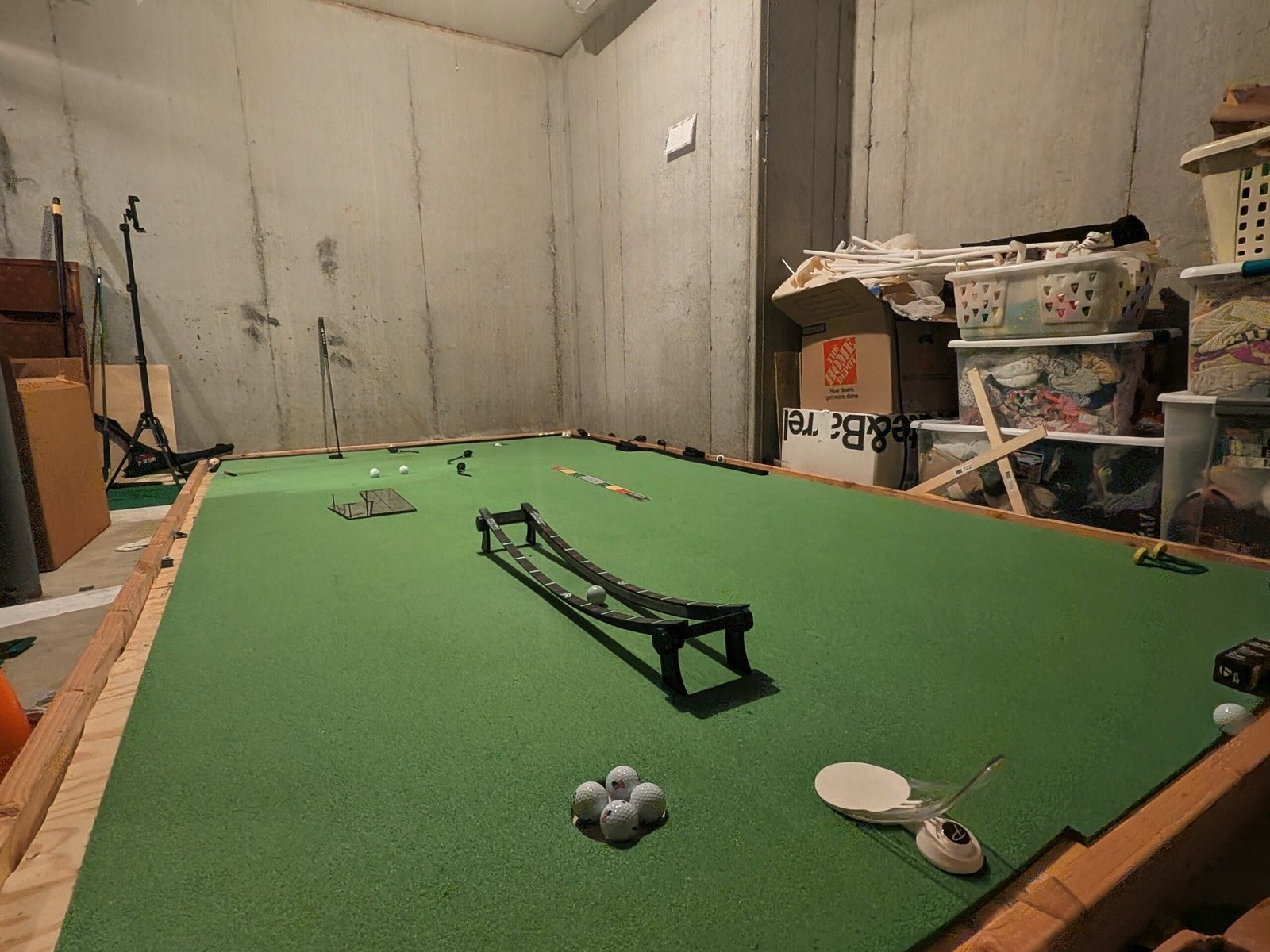
One of the most significant advantages of this setup is adjustability. I can create right-to-left and left-to-right breaking putts, and even change green speed by sweeping the grain of the mat. It’s not real grass, but it’s consistent, and consistency is what matters most indoors.
I practice almost every day, usually between work meetings since I work from home. Dedicated sessions run about 45 minutes, focused and intentional.
Each session unfolds in stations, so nothing feels rushed or random.
If I’m confident in my start line, everything else gets easier. When speed and reads are close, starting the ball where I intend it to go builds trust, and confidence is everything in putting.
What I work on:
Primary distance: 6 feet
The goal is simple: start the ball on line, over and over, until it feels automatic.
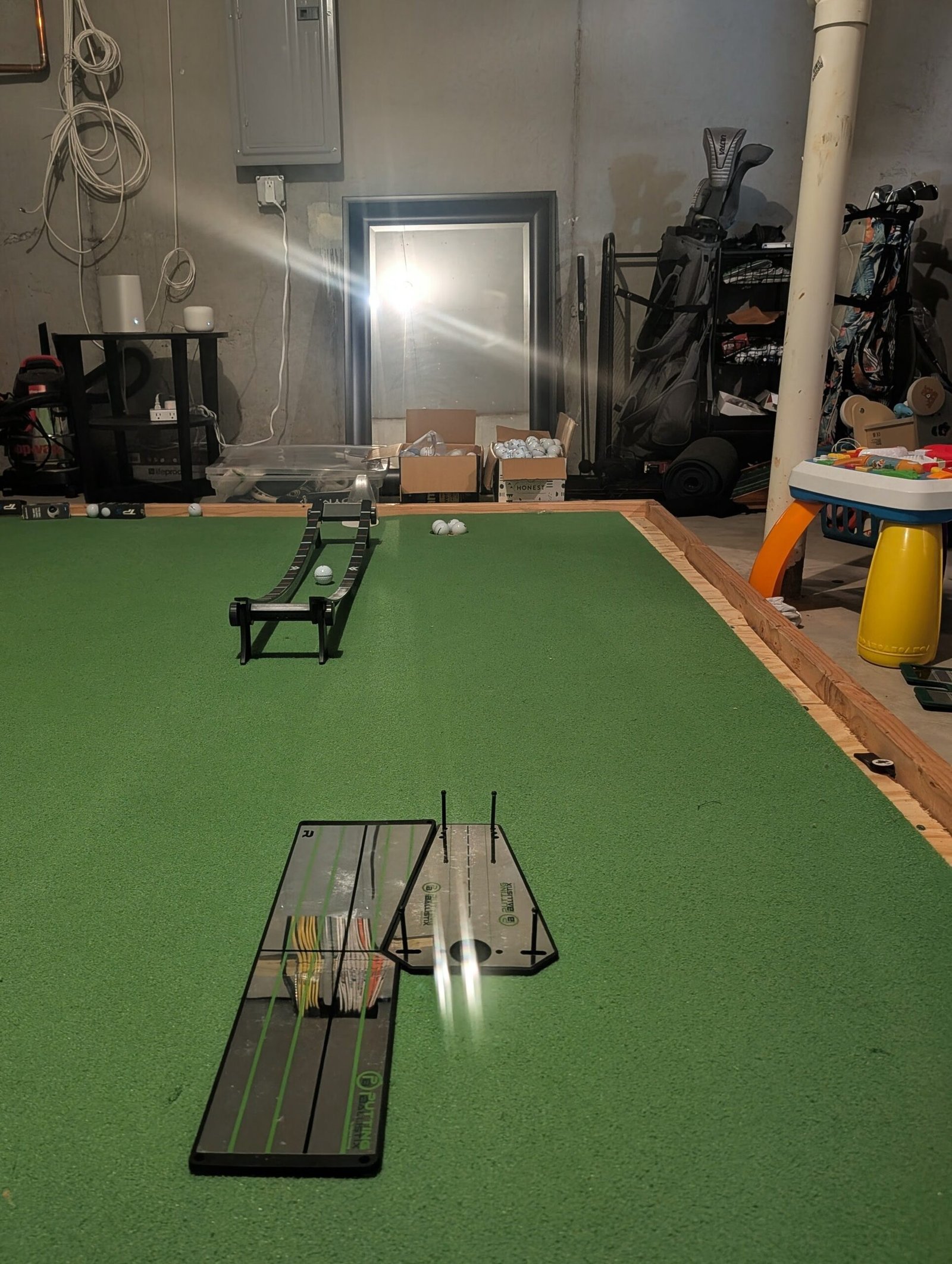
Indoors, speed control matters more than reading putts. I can’t recreate every break, but I can train how far the ball rolls based on stroke length.
I work from 5, 8, and 12 feet, using the stroke meter to understand how far the putter moves back and through. I focus on a shorter backstroke and longer follow-through, roughly 40% back, 60% through, to fight my tendency to decelerate.
One of my favorite drills is a Jason Day–style speed drill:
My BirdieBall mat rolls around 10–11 on the stimp, which quickly exposes speed mistakes, and that’s precisely the point.
Missing short putts changes everything in a round. It affects decision-making, pace, and confidence almost immediately.
I use pressure drills and must-make sequences to build familiarity instead of fear. The goal isn’t perfection, it’s comfort when the putt matters.
Every putt goes through the same process:
Practicing my routine matters just as much as the putts themselves. When the routine becomes second nature, it carries directly to the course, especially under pressure.
A full session lasts about 45 minutes, four times per week. On other days, I’ll still roll putts during short breaks to maintain feel.
I intentionally changed the order of my stations. Some days I spend more time on setup, other days on breaking putts or speed control. Mixing it up keeps me engaged and prevents going through the motions.
I don’t spend much time worrying about reading putts indoors. Every green is different, and no indoor setup can replicate that. Instead, I focus on making the fundamentals second nature so I can commit fully to reading in the course.
I also avoid mechanical overload. Putting still requires feel and athleticism. If you get too robotic, you lose touch. Structure matters, but thinking has to develop naturally.
When the season starts, I expect:
When pressure hits, muscle memory should take over. That’s the payoff of winter work.
Once I’m back on real greens, practice changes, I’ll hit putts to different holes, different breaks, rarely repeating the same look. Practice becomes more like playing, reacting, adjusting, and committing.
This off-season putting routine works because it’s repeatable. Discipline matters more than perfection. You don’t need my exact setup; you need your version of consistency.
Winter is where confidence is built quietly. When the season arrives, it shows up when it matters most.
What are you working on this off-season: putting, wedges, or the mental game?
Please drop a comment or send me a message. More posts coming soon on complete swing work, wedge play, and the mental side of scoring.